Startup Cursor today released a new version of its popular artificial intelligence coding platform.
The release includes features that will make it easier for developers to automate programming tasks using AI agents. It also introduced improvements in other areas.
Cursor, officially Anysphere Inc., has raised more than $3 billion in funding from Nvidia Corp., Google LLC and other prominent backers. It provides a code editor that uses AI to perform tasks such as creating new app features and modifying existing ones. The tool is powered not only by large off-the-shelf language models like Claude but also by algorithms Cursor has developed in-house.
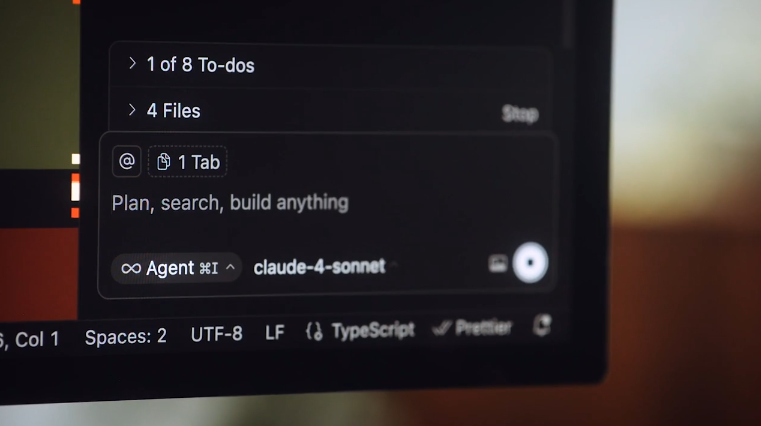
Cursor 3, a new platform release that launched today, adds a chatbot interface. It allows developers to enter a natural language description of the feature they wish to build and specify which LLM should perform the task. Cursor 3 generates the requested code and a demo video showing how it works.
The new chatbot interface uses multiple AI agents to complete tasks specified by the user. Some of those agents run in the cloud, while others are installed on the user’s local machines. Developers can manage both types of agents using the newly added sidebar.
Cursor’s cloud-based agents can access more hardware resources than those running on workstations. As a result, a large number of them can run in parallel to speed up time-consuming tasks. Desktop agents are slow, but they enable developers to open locally generated code, edit it manually and run tests.
Cursor 3 allows users to switch between these two modes. A developer can have a set of cloud-based agents generate a piece of code and send it to a desktop-based agent for local editing. Cursor says Composer 2, an internally developed LLM it released last month, is well suited for such tasks. The model is more economical than several other LLMs supported by the platform.
When developers use the Cursor to edit the user interface, they can activate the newly added Design Mode to speed up the workflow. The feature makes it possible to select interface elements and add natural language text that explains how they should be changed. Cursor’s AI agents automatically apply the requested changes.
The platform shows a step-by-step overview of each task you complete. The cursor provides a natural language explanation of all the sub-steps, highlights any possible errors and provides screenshots of its operation. Developers can modify the workflow by typing a response.
Cursor 3 also introduces several other improvements. According to the company, the new shortcut enables developers to send an application to multiple LLMs and choose the best answer. Another enhancement speeds up the process of reviewing code changes before releasing them to production.
Image: Cursor
Support our mission to keep content open and free by engaging with the CUBE community. Join CUBE’s Alumni Trust Networkwhere technology leaders connect, share wisdom and create opportunities.
- 15M+ viewers of CUBE videosenabling conversations across AI, cloud, cybersecurity and more
- 11.4k+ CUBE alumni – Connect with more than 11,400 technology and business leaders who are shaping the future through a unique network based on trust.
About SiliconANGLE Media
Founded by technology visionaries John Furrier and Dave Vellante, SiliconANGLE Media has built a dynamic ecosystem of industry-leading digital media products that reach 15+ million elite technology professionals. Our new ownership of CUBE AI Video Cloud is starting to engage with audiences, using CUBEai.com’s neural network to help technology companies make data-driven decisions and stay at the forefront of industry conversations.