Best Cybersecurity Tools for Remote Workers in 2026 | Stay Safe Online
Remote work has become a permanent part of modern business, and in 2026, more professionals than ever are working from home, coffee shops, coworking spaces, and while traveling. While remote work offers flexibility and freedom, it also creates serious cybersecurity risks.
Hackers are increasingly targeting remote workers because personal devices and home networks are often less secure than corporate office systems. From phishing scams to identity theft and ransomware attacks, online threats continue to grow every year.
That’s why using the right cybersecurity tools in 2026 is no longer optional — it’s essential.
In this guide, we’ll explore the best cybersecurity tools for remote workers, how they protect your data, and why online safety matters more than ever.
Why Remote Workers Are Major Targets for Cybercriminals
Remote employees often access sensitive files, business accounts, and customer data from different locations and devices.
This creates several security risks, including:
- Weak Wi-Fi security
- Unsafe public internet connections
- Password theft
- Malware attacks
- Phishing emails
- Data leaks
- Identity fraud
Cybercriminals know that remote workers may not have enterprise-level protection, making them easier targets.
Best Cybersecurity Tools for Remote Workers in 2026
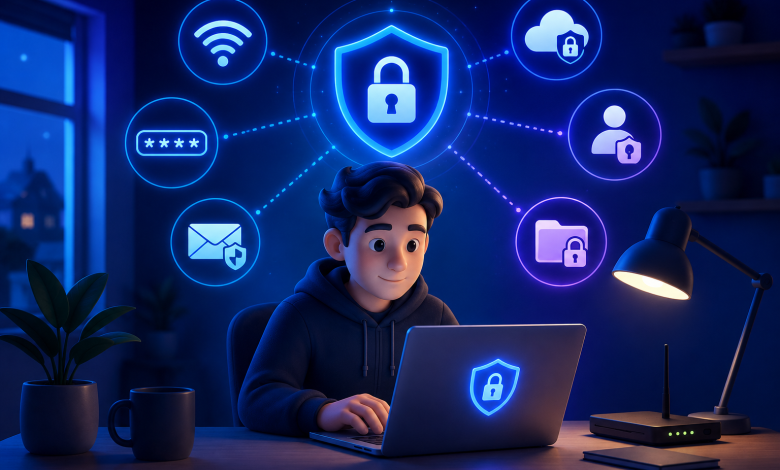
1. VPN Services
A Virtual Private Network (VPN) encrypts your internet connection and protects your online activity from hackers.
VPNs are especially important when using:
- Public Wi-Fi
- Hotel internet
- Coffee shop networks
- Airport connections
Benefits of VPNs include:
- Private browsing
- IP address protection
- Secure file access
- Safer remote work environments
Popular VPN providers in 2026 include:
- NordVPN
- ExpressVPN
- Surfshark
2. Password Managers
Using the same password across multiple accounts is one of the biggest security mistakes remote workers make.
Password managers help users:
- Generate strong passwords
- Store login credentials securely
- Auto-fill account details safely
- Prevent password reuse
Strong password security reduces the risk of hacking and identity theft.
Popular password managers include:
- 1Password
- LastPass
- Bitwarden
3. Antivirus and Endpoint Protection
Modern antivirus software does more than remove viruses.
Advanced cybersecurity tools now protect against:
- Ransomware
- Spyware
- Phishing attempts
- Suspicious downloads
- Harmful websites
Endpoint protection is especially important for freelancers, business owners, and remote teams handling sensitive information.
Trusted antivirus solutions include:
- Norton
- Bitdefender
- McAfee
4. Multi-Factor Authentication (MFA)
Passwords alone are no longer enough.
Multi-factor authentication adds an extra layer of security by requiring additional verification, such as:
- SMS codes
- Authentication apps
- Fingerprint scans
- Face recognition
Even if hackers steal your password, MFA can still block unauthorized access.
5. Secure Cloud Storage
Remote workers regularly share documents online, making cloud security extremely important.
Secure cloud storage platforms help protect files using:
- Data encryption
- Access permissions
- Backup recovery systems
- Secure sharing controls
Popular cloud platforms include:
- Google Drive
- Dropbox
- Microsoft OneDrive
6. Encrypted Communication Apps
Cybercriminals may attempt to intercept sensitive conversations and business discussions.
Encrypted messaging apps protect communication privacy through secure encryption technology.
Popular encrypted communication tools include:
- Signal
- Telegram
Common Cybersecurity Threats in 2026
Phishing Scams
Fake emails and websites designed to steal login information remain one of the biggest online threats.
AI-Powered Cyber Attacks
Hackers are now using artificial intelligence to create more realistic scams and automated attacks.
Ransomware
Cybercriminals lock important files and demand payment to restore access.
Identity Theft
Personal information can be stolen and used for fraud or financial crimes.
Cybersecurity Tips for Remote Workers
Use Strong Passwords
Avoid simple passwords like:
- 123456
- password
- birthdays
- names
Instead, create long and unique passwords for every account.
Update Software Regularly
Software updates often include important security patches.
Outdated systems are easier for hackers to attack.
Avoid Suspicious Links
Never click unknown links in emails, text messages, or social media.
Always verify sources carefully.
Backup Important Files
Cloud backups and external storage help protect data if ransomware attacks occur.
Secure Your Home Wi-Fi
Use:
- WPA3 encryption
- Strong router passwords
- Updated firmware
- Hidden network settings when possible
Why Cybersecurity Matters More Than Ever
As remote work continues growing worldwide, cybersecurity has become one of the most important digital skills in modern life.
Businesses now prioritize online safety because data breaches can cause:
- Financial losses
- Reputation damage
- Customer trust issues
- Legal problems
Even individuals who work independently need strong digital protection in 2026.
The Future of Cybersecurity
Experts predict cybersecurity tools will become smarter with:
- AI threat detection
- Real-time attack prevention
- Automated security monitoring
- Biometric verification systems
- Zero-trust security models
Technology companies continue investing heavily in cybersecurity innovation to protect users from evolving online threats.
Final Thoughts
Remote work offers incredible flexibility, but it also increases online security risks. Using the best cybersecurity tools for remote workers in 2026 can help protect your personal information, financial accounts, and business data from cybercriminals.
From VPNs and password managers to antivirus software and encrypted communication apps, digital protection is now essential for anyone working online.
Cybersecurity is no longer just an IT issue — it’s part of everyday life in the digital world.